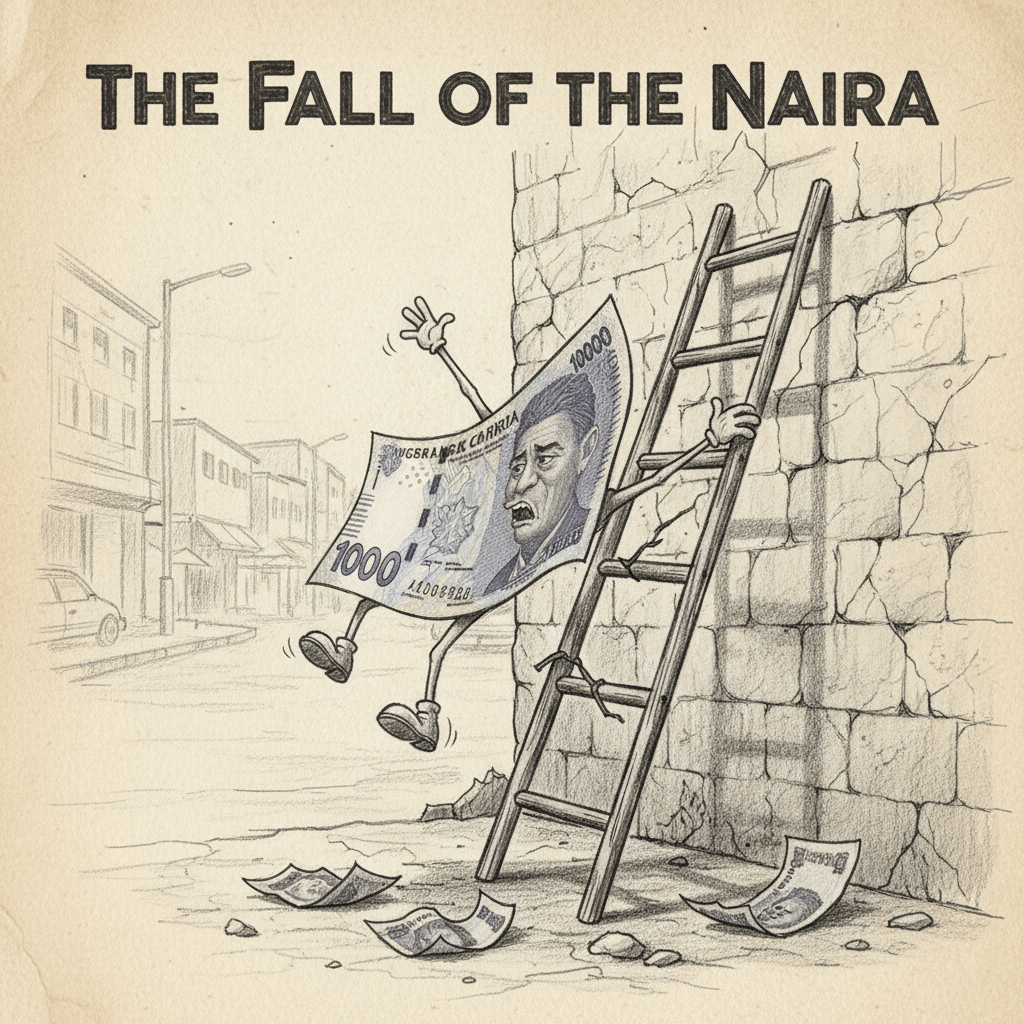
We’ve all seen it and experienced it. Money used to go further. 5K used to mean something. 100K used to be big money.
We don’t even use the smaller notes like ₦10, ₦20, or ₦100 anymore. They’ve gone the way of the dodo. No one uses them because they can’t buy anything. Even salaries that used to sustain us years ago are barely enough.
That’s inflation staring us in the face, making life more miserable. But what is this inflation of a thing, specifically, and how does it happen?
We hear it all the time in the news, on social media, from politicians, bankers, and finance gurus. We hear how it makes everything more expensive. Inflation does make everything more expensive over time. It costs you more money to buy fewer products than it used to.
What Inflation Is
This is not a uniquely Nigerian problem. It happens in every country. In fact, in some cases, low levels of inflation are considered healthy for an economy, particularly when prices are rising due to demand. What makes inflation unhealthy, especially in developing countries like Nigeria, is the rate at which it occurs.
Developed countries target a 2% inflation rate, while developing countries can experience inflation rates of 20% or more in very volatile ways.
When inflation happens in advanced countries, it’s usually caused by an increase in money supply, either due to low interest rates, government policies, or more money being printed. This makes citizens spend more and creates an inability for suppliers to keep up, hence the price increases.
But in Nigeria, for instance, inflation often occurs due to structural issues in the supply and distribution of food and consumer goods.
One way or another, it’s always because there’s friction surrounding the supply of goods and services.
- When goods are harder to produce or move, the prices increase.
- The road to transport products isn’t secure, and prices rise.
- The dollar is more expensive for importing common consumer goods, fewer products are bought, scarcity comes in, and prices rise.
Economic situations -> supply issues -> price increases.
When inflation occurs in Nigeria, it often happens across multiple goods/services at the same time, which makes it more noticeable, causing people to complain.
The Big Triggers of Inflation in Nigeria.
Import Dependency
On the surface, it looks like Nigeria has a trade surplus (i.e., exports more than it imports: 2.75 trillion exports vs 15.29 trillion imports). But roughly 80-90% of Nigeria’s exports are from crude oil. That is a high dependence. For non-oil goods, which include manufactured items, refined petrol, food, and other consumer goods, we depend so much on imports.
Currency Devaluation
This dependence reduces the demand for Naira in the global markets because we buy more than we sell. The low demand for Naira weakens its value. It also increases the demand for currencies like the dollar, GBP, Euros, etc. Because now we need to have these currencies to buy goods from those countries.
This trickles down to the end consumer because now you are paying more in weaker Naira for foreign goods at the cost of their original foreign currency value. So whenever the dollar is scarce, our Naira weakens further, and goods increase in price simultaneously.
Supply Chain Issues
Whenever something goes wrong in exporting countries, whether a natural disaster, strikes, political instability, or global shortages, Nigeria feels it directly through price spikes. This would not be happening if we produced most of our goods locally.
The fact that we rely so much on imported goods discourages local manufacturers. Money that should have stayed within the economy leaves the country instead of circulating. Long-term, it makes us vulnerable to the ebbs and flows in other countries due to dependency.
Fuel Dependency
In the pre-oil era of Nigeria (1950s-1960s), Nigeria’s economy was based on agriculture. We exported cocoa, kola nuts, palm oil, groundnuts, and rubber, among others, in large quantities.
It was a true trade surplus because the agricultural exports outweighed the imports. The Naira was strong as a result because it was in demand by other countries to access our products. But after the discovery of oil in the late 1950s, this led the country into an era where oil became the largest export. Agriculture became neglected and led our exports to reduce in volume. Food became expensive locally, and the Naira weakened globally.
Our dependence on crude oil exportation as a nation has made us extremely vulnerable to fluctuating global oil prices. When the crude oil prices crash, Nigeria takes a hit to its revenue, which means less dollar reserves. With fewer dollar reserves, importers have to compete for the available dollars in exchange for Naira on the foreign exchange market. This means for dollars, demand is greater than supply. The Naira loses value against the dollar; a weakened Naira makes imports more expensive. Importers pass the increased price to Nigerians, causing inflation.
Another part of this is that Nigeria doesn’t have adequate infrastructure to refine its crude oil into petroleum. So, despite the fact that we export crude oil, we now have to import refined petroleum, which then cancels out some of the benefits of exporting oil, making us sensitive to any global increase in petrol prices, which in turn causes a trickle-down effect.
When fuel costs more, transportation costs more, which affects everything from food prices to goods and services across the country.
Crude oil exports -> imported refined petroleum -> global oil price fluctuations -> higher fuel costs locally -> increased transportation costs -> price of goods and services rise -> inflation.
Insecurity
Insecurity is also responsible for some of the inflation in Nigeria, especially with food inflation. When farmers get displaced by violence from their farms via banditry, kidnapping, and farmer-herder conflicts, it forces them off their lands, destroying crops and overall reducing yields, directly causing food shortages and price hikes.
Even the transport routes are affected by the insecurity. To compensate for the risk, drivers charge more or take longer routes, while some refuse to travel at all or only travel during certain hours. Fewer trucks on the road means less supply of food and other goods, which pushes prices up. Urban areas feel it more because they rely almost entirely on transported food.
Northern Nigeria produces a significant share of Nigeria’s food supply, but unfortunately, insecurity is also concentrated in key northern agricultural states. This creates a direct pipeline from insecurity to food shortages to food price increases nationwide.
Policy
Government policies like VAT, tariffs, and FX intervention and interest rates directly lead to inflation.
Subsidy
A big one is subsidies. The government has subsidized petrol costs and electricity since the 1970s. That is, they absorbed part of the cost, but because they didn’t think Nigerians could fully afford the product.
Ironically, subsidies were first temporarily added to suppress inflation to give room for the government to build refineries and other infrastructure. In 2024, there was a partial removal of the electricity subsidy for Band A (high consumption: 20+ hours/day) users of electricity. That barely had an effect on inflation because those affected were a smaller part of the population.
But the fuel subsidy removal that took place in 2023 led to a very noticeable price increase in fuel, which meant any other goods and services that depended on transportation and fuel increased their price at the same time, leading to inflation.
The original subsidy was put in place to suppress inflation and give the government a breathing room to build the necessary infrastructure to refine our crude oil. Unfortunately, in the 50 plus years since the subsidy was first added, not enough has been done to meet the local demand for refined petroleum without the importation of fuel.
Tariffs and Taxes
The tariffs from the government on some imported goods also led to price increases when local farms/factories cannot meet the demand. In 2015, VAT increased from 5% to 7.5% in 2020, under the Finance Act. This made everything subject to VAT slightly more expensive. This didn’t cause widespread inflation, but it shows that decisions by the government can lead to price increases.
How Inflation is Measured
In Nigeria, as in most countries, inflation is measured by tracking the prices of a representative set of common household goods and services over time, called a basket of goods. It includes item categories like food, fuel, transportation, housing, and other everyday products.
By comparing how the total cost of the basket changes from month to month or year to year, the government calculates the inflation rate. The National Bureau of Statistics publishes the official inflation rates on its website. The CBN also publishes this data on its website.
Why This Matters For Your Money
Understanding what causes inflation in Nigeria is important for your personal finances because you now have a more informed grasp of inflation, not just some vague, “inflation is bad, invest”. Knowing the mechanics makes it real.
When you:
- understand how inflation works
- that it’s not your fault that your previously adequate salary isn’t enough anymore
- that being hardworking isn’t enough
You feel the urgency to make informed decisions because inflation quietly erodes savings, reduces purchasing power, and drives up the cost of living.
In our next post, we’ll dive deeper into exactly how inflation eats into your money and what steps you can take to protect yourself.